Stop Doing Parasite Cleanses — Here Are 5 Reasons Your Cleanse Keeps Failing (And What Actually Works Instead)
Summary: Most parasite cleanses follow the same pattern — a good first week, then every symptom comes back. The problem isn’t the herbs. It’s what they can’t reach. Here are 5 things about gut biofilm that explain why your protocol keeps failing — and the one compound published research says can actually break through it.
1. Your Cleanse Isn’t Failing — It’s Hitting a Wall You Can’t See
Every herbal parasite cleanse on the market follows the same basic logic: flood the gut with antimicrobial compounds to flush out unwanted organisms. Wormwood, clove, black walnut hull, oregano oil — they all work on the same principle.
And for about a week, most of them seem to work. Bloating decreases. Energy picks up. You feel lighter. Then somewhere around day 10 to 14, everything comes crashing back. Same bloating. Same fatigue. Same brain fog. Often worse than before you started.
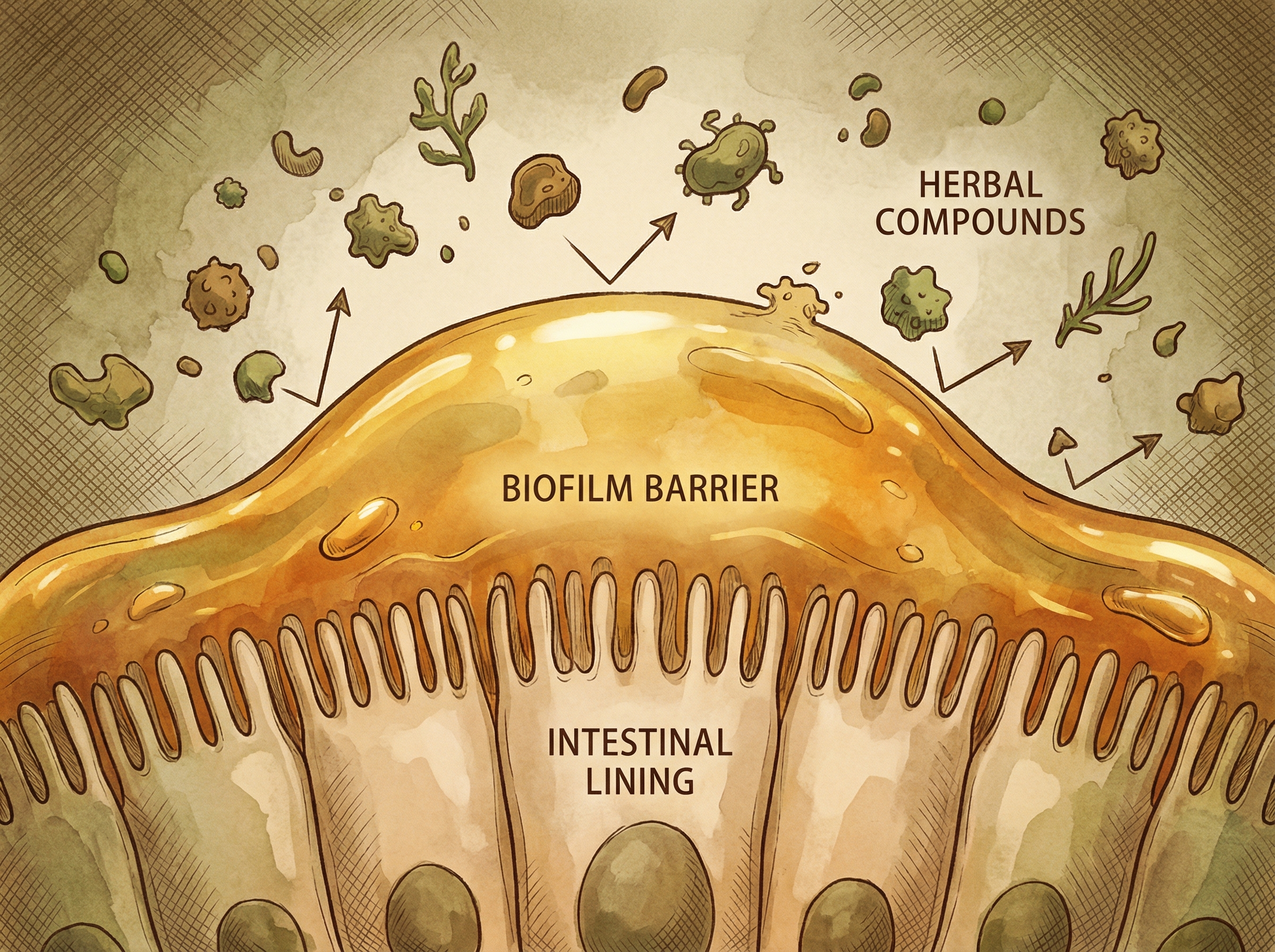
The reason isn’t that the herbs are weak. It’s that they can only reach what’s exposed — the roughly 20% of organisms floating freely in the gut. The other 80% is anchored behind a physical barrier called biofilm.
Biofilm is a sticky, resilient matrix made of sugars, proteins, and extracellular DNA that organisms secrete around themselves. It hardens over time and acts as a shield — blocking herbal compounds, binders, charcoal, and clay from reaching the main colony underneath.
Why the “good first week” happens every time: Your cleanse flushes the unprotected organisms — the stragglers. That’s the improvement you feel. But the protected colony behind the biofilm is untouched. The moment you stop, it repopulates the gut within days. That’s the relapse.
2. “Stronger” Cleanses Don’t Fix the Problem — Here’s Why

The natural instinct after a failed cleanse is to try a stronger one. Higher-dose herbs. Longer protocols. More aggressive binders. The logic seems sound — if the last one almost worked, a bigger version should finish the job.
But biofilm doesn’t respond to dosage the way we expect. Published research on microbial biofilms shows that the matrix can resist antimicrobial concentrations up to 1,000 times higher than what would kill the same organisms in their free-floating state.
That’s not a small margin. The biofilm barrier is fundamentally different from the organisms it protects. You can’t brute-force through it with more of the same compounds. You need something that targets the structure of the biofilm itself — the sugar-protein matrix — not just the organisms behind it.
The key distinction: Most cleanses are antimicrobial — they target organisms. What’s needed is a biofilm disruptor — something that degrades the protective shield so the organisms are actually exposed and can be addressed.
Try It Risk-Free For 30 Days →3. One Compound Keeps Showing Up in the Biofilm Research: Thymoquinone
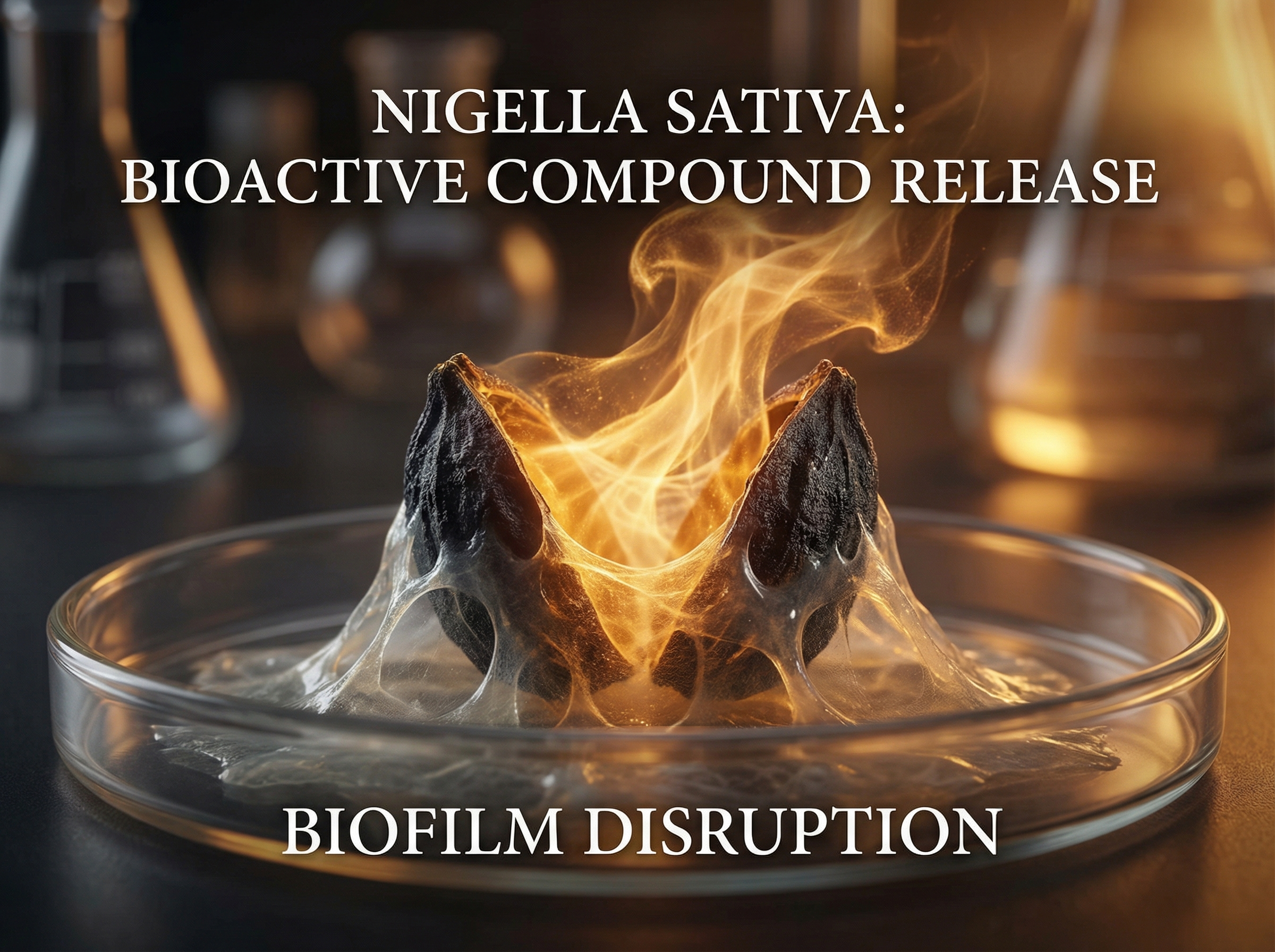
When you move past wellness blogs and into published research on biofilm disruption, one compound appears across multiple peer-reviewed studies: thymoquinone — the primary active compound in Nigella sativa (black seed oil).
Thymoquinone has been studied in over 1,600 published papers. Its documented properties include antimicrobial, anti-inflammatory, and immune-modulating effects. But its role in biofilm disruption is what makes it relevant here — it interferes with the formation and structural integrity of the biofilm matrix itself.
That’s the critical difference. Thymoquinone doesn’t just act on what’s exposed. It works on the shield. It’s a biofilm disruptor — the one thing missing from every standard cleanse protocol.
So why haven’t most people gotten results from the black seed oil on their shelf? Because concentration matters — enormously.
Try It Risk-Free For 30 Days →4. Most Black Seed Oil Contains Almost None of the Active Compound
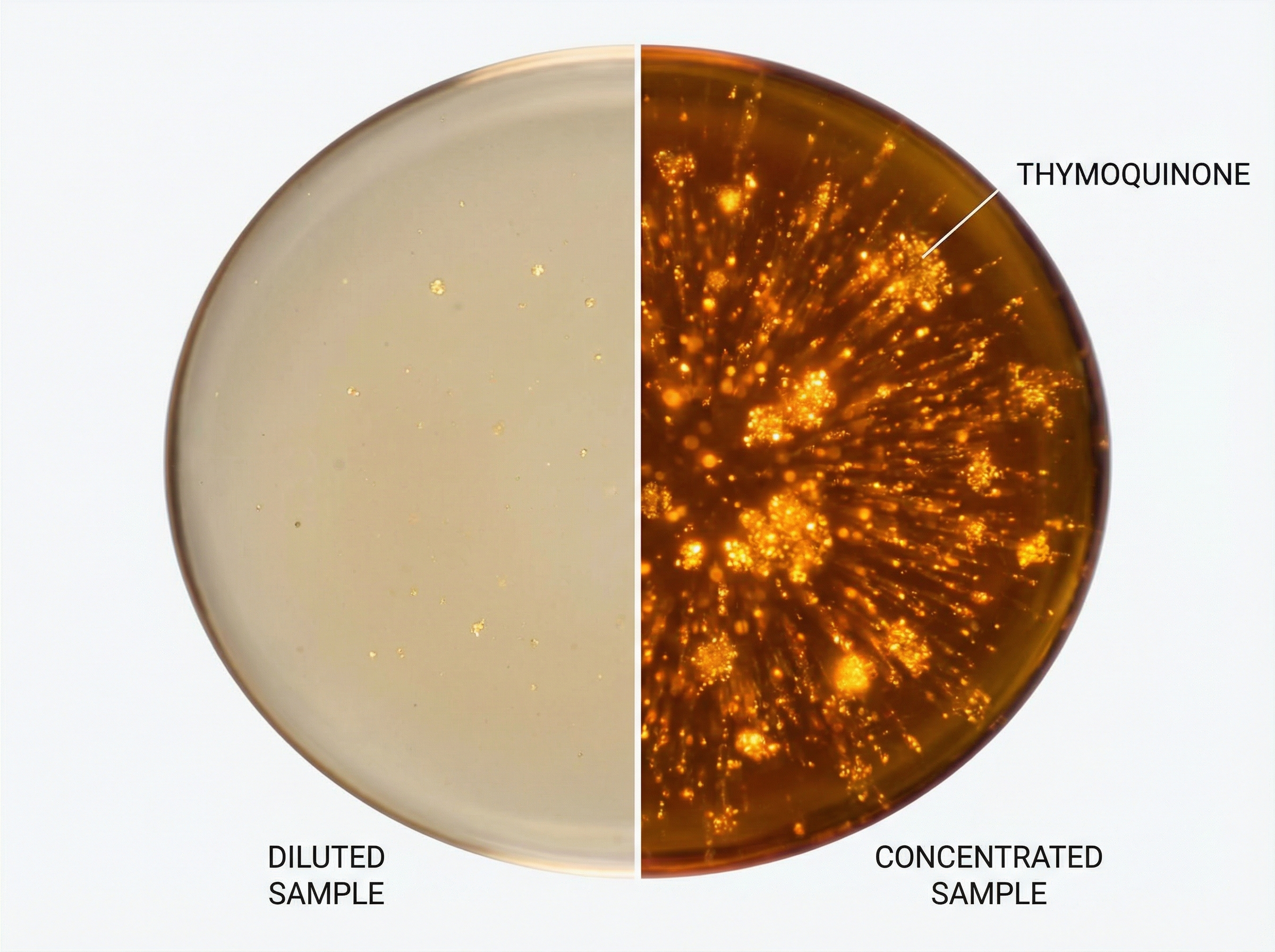
Not all black seed oil is created equal. Independent testing has found massive variation in thymoquinone content across commercial products — in some cases up to 263x difference between brands.
Most commercial black seed oil is sourced from low-altitude farms in Egypt, India, or Turkey. Those seeds typically contain between 0.5% and 1.2% thymoquinone. At that concentration, you’re getting a fraction of what the published studies actually use.
Ethiopian black seed oil is different. In the Ethiopian Highlands — above 8,000 feet — extreme altitude, UV radiation, and temperature swings force the Nigella sativa plant to dramatically overproduce thymoquinone as a survival mechanism. It’s a measurable stress response in the plant’s chemistry.
When researchers compared black seed oil across every major growing region, the Ethiopian highland variety consistently tested at up to 5x higher thymoquinone concentration than any other source. That’s not marketing. That’s agricultural science — altitude changes the chemistry of the seed.
Try It Risk-Free For 30 Days →5. The Delivery Method Determines Whether It Actually Works
Even if you find a high-thymoquinone source, how it’s delivered matters. Liquid black seed oil oxidizes the moment the bottle is opened. Every exposure to light and air degrades the thymoquinone — meaning the first dose is stronger than the last. By the time you’re halfway through the bottle, you’re getting significantly less of the active compound than what’s listed on the label.
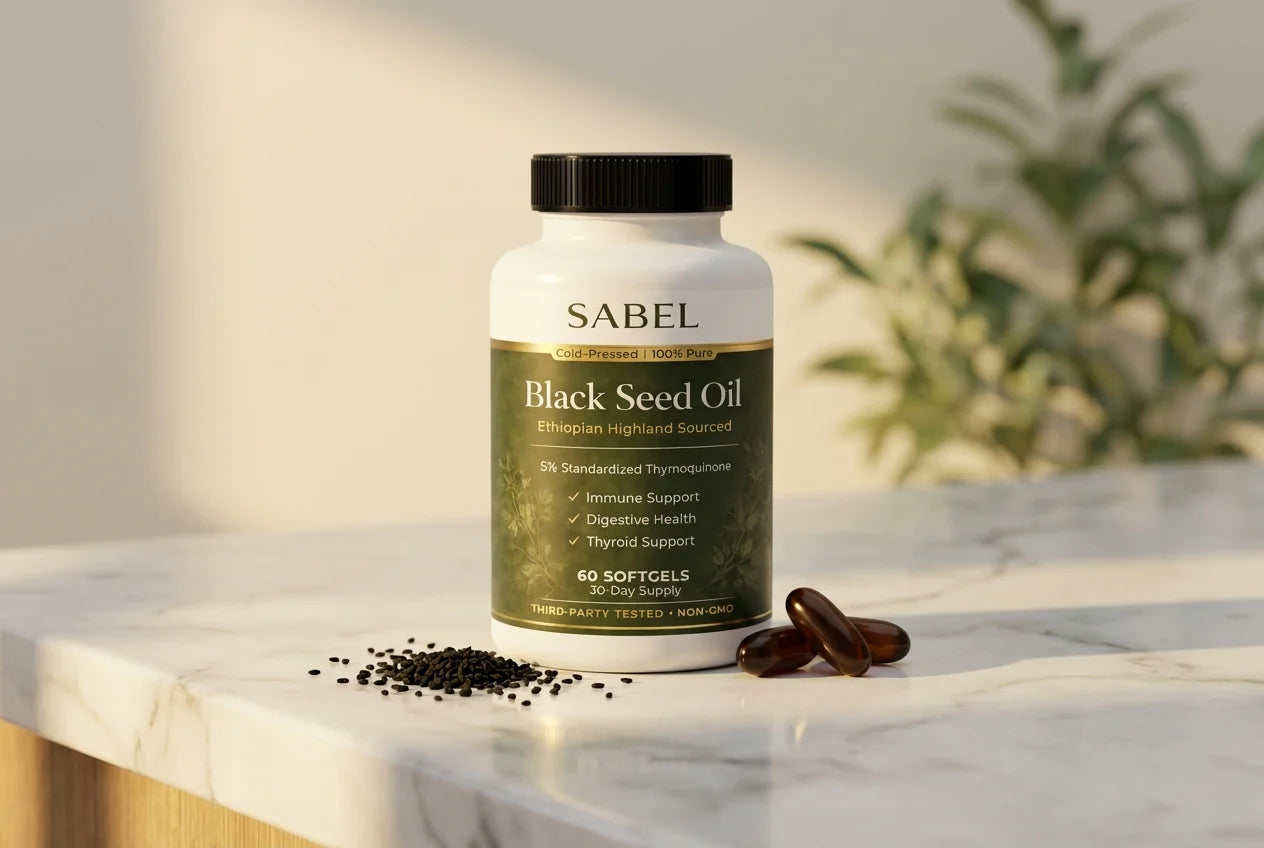
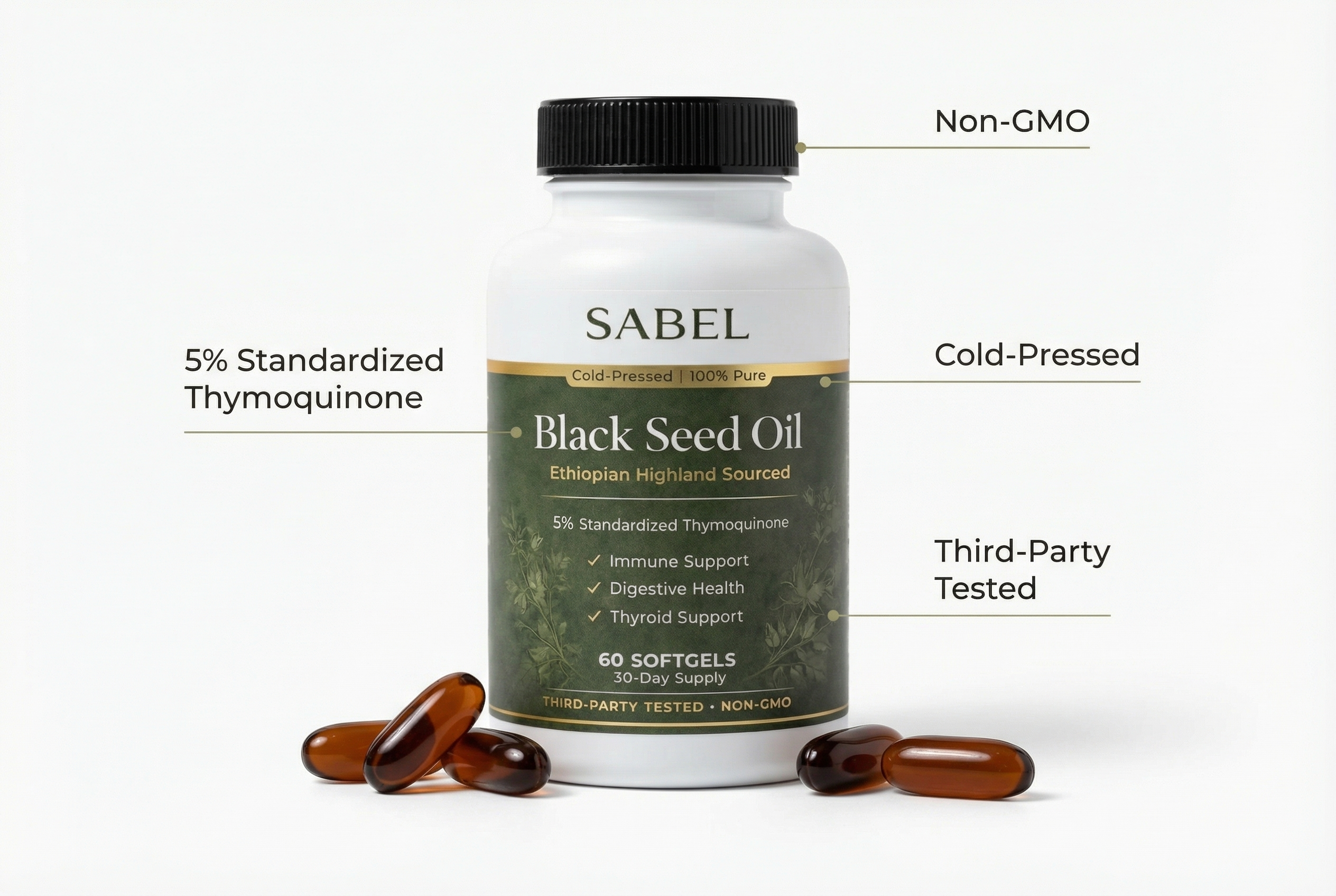
Sabel Life uses cold-pressed Ethiopian Highland black seed oil in sealed softgel capsules. Each capsule protects the oil from oxidation, delivers a consistent dose, and eliminates the degradation problem entirely.
One softgel per day. Standardized to 5% thymoquinone. Third-party tested for purity, potency, and heavy metals. No fillers. No artificial ingredients. Non-GMO.
Why this matters for biofilm disruption: Biofilm doesn’t dissolve overnight. It requires consistent, adequate-dose exposure over weeks. If your thymoquinone is degrading in a liquid bottle, you’re getting inconsistent doses — and the biofilm stays intact. Sealed softgels deliver the same effective dose every single day.
 Try It Risk-Free For 30 Days →
30-Day Money-Back Guarantee — Because The Results Speak For Themselves
Try Sabel Life for 30 days. If you don’t notice a difference in your energy, digestion, or overall well-being, get a full refund. No questions asked.
Most customers report noticeable improvements within 2–4 weeks — clearer thinking, better digestion, more sustained energy throughout the day, and a general sense of feeling like their body is finally working the way it should.
This isn’t another supplement you take for a week and forget about. This is the one that makes you wonder why nobody told you about it sooner.

But Don’t Just Take Our Word For It... See What Others Are Saying:
“I’ve been taking black seed oil on and off for about four years. Tried at least six or seven different brands — liquids, capsules, the cheap ones on Amazon, the expensive ones at Whole Foods. Never really noticed much of a difference with any of them. I kept taking it because the research seemed solid, but honestly I was starting to think maybe it just didn’t work for me.
A friend told me about Sabel Life and said the Ethiopian sourcing made a difference. I figured it was just marketing, but I ordered a bottle anyway. Within the first two weeks, I noticed my digestion was noticeably better. Less bloating after meals. More consistent energy in the afternoon — I wasn’t hitting that 2 PM wall anymore.
I’m on my third bottle now. This is the only black seed oil I’ll buy going forward. The difference between this and what I was taking before is night and day.”
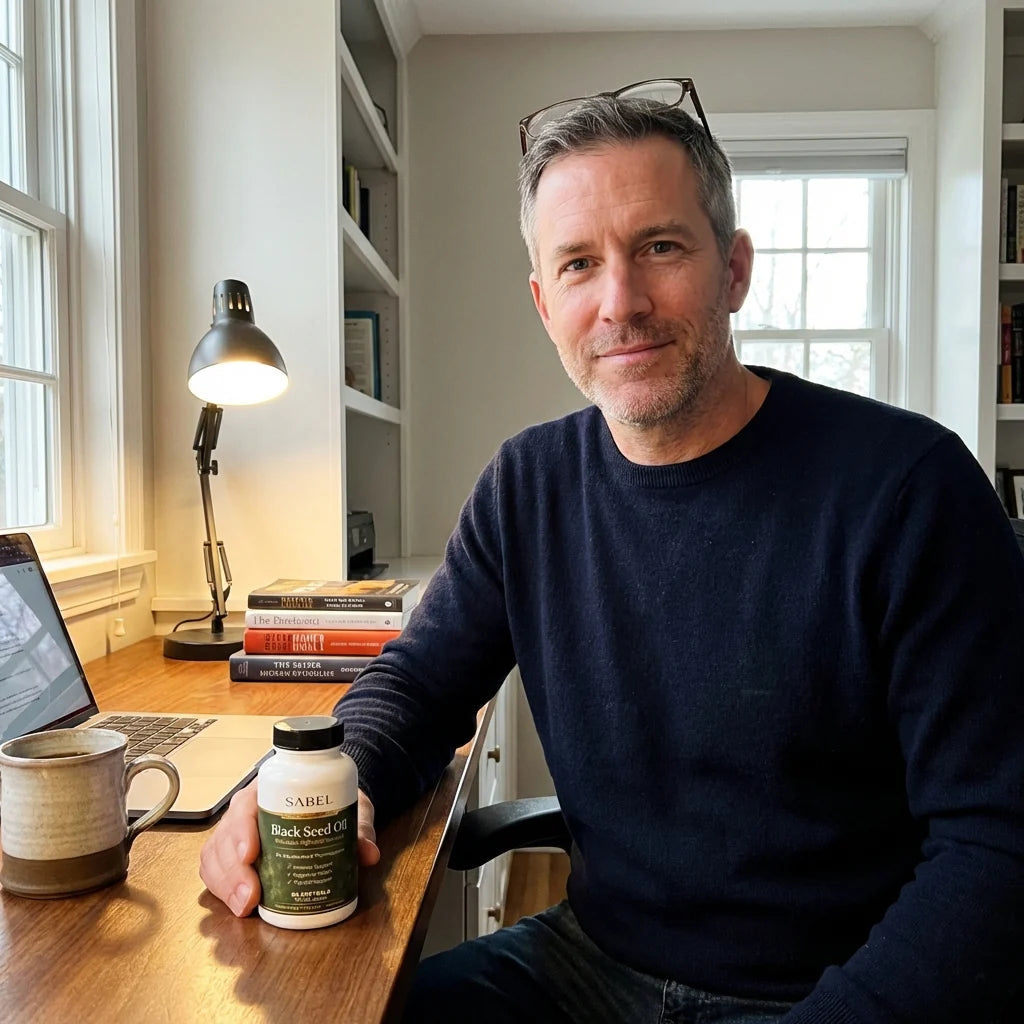
“I started seeing a naturopath last year for chronic inflammation and gut issues. She told me to look for black seed oil that was Ethiopian-sourced and standardized to at least 3% thymoquinone. I looked at probably a dozen brands and Sabel Life was the only one that hit 5% and was actually third-party verified.
I’ve been taking it daily for about six weeks now. The joint stiffness I was dealing with every morning has improved significantly. My digestion has been more consistent. And I just generally feel better — more energy, less brain fog, sleeping more soundly.
I brought the bottle to my next appointment and my naturopath said this was exactly what she was talking about. If you’ve been told to try black seed oil but didn’t know which one to get — this is the one.”